Forbes: "Video generates 41% more traffic than photos or text. Homepages with video show 20% more conversions. Landing pages — 80% more."
A director's main task is to make a video interesting and effective. This article is about creating content, not about promotion — and it's aimed more at businesses and online stores, though hobbyists will find it useful too. The principles of storytelling are similar everywhere.
Let's start with some disappointment. You won't find a ready-made recipe or a magic formula for gaining 100,500 subscribers or boosting your site's conversion by 666% here. I'm always wary of people who promise exact numbers. YouTube, like any media environment, is largely a subjective and intuitive search. Every person, every product, every team has its own strength and its own path — and that's exactly what you need to find.
I shot my first review as a test assignment, on my own phone, with just two days to deliver. But instead of rushing, I sat down and wrote a script.
You don't need to write out every detail, but at least sketch out the structure of your review. Define your goals, tasks and audience. Even if you're great at improvising, a script will save you hours on set and hours more in editing. Most importantly, it will make your video more logical and dynamic. If you're already an experienced host, at least outline the skeleton of the story — even if you never look at it again, it will help you form the structure in your head.
The simplest way to make any content more interesting is to make it varied.
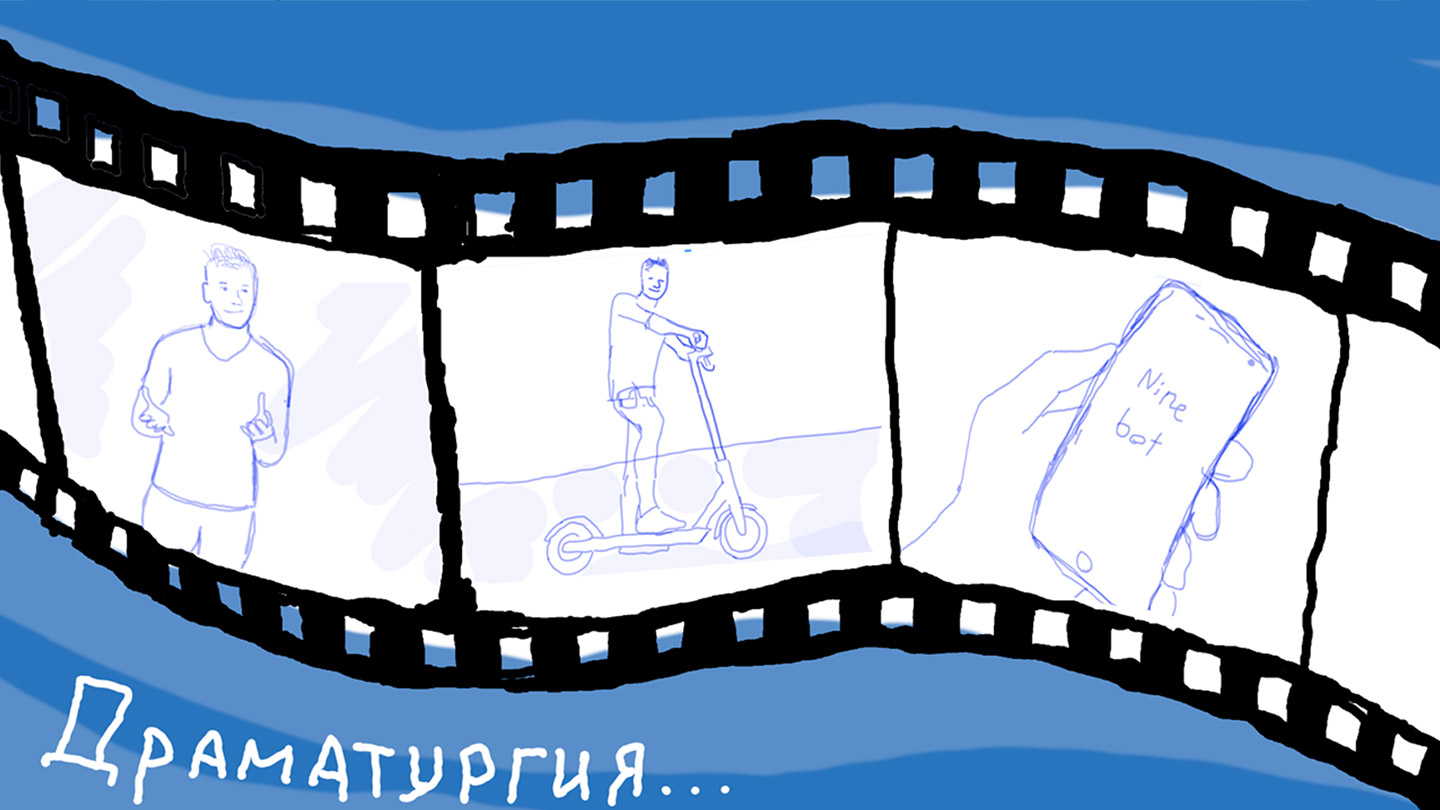
A story thrives on development, and people get bored watching the same thing over and over. For example, talk to the camera for a bit, then show a close-up of the product's features. Then find a passer-by and let them try the product. As Martin Scorsese put it: "Every shot should move the story forward."
You don't need to master every law of drama or storytelling. Sometimes it's enough to change the rhythm of the edit and the music. A great example is classic cinema — notice, next time you watch a film in a theater, how the pace of the picture shifts. A good edit flows in one breath. A monotonous one, held to a single rhythm throughout, wears the viewer out — for example, too many dialogue scenes, or action scenes that run too long.
When I started shooting reviews, I thought it was enough to praise a product on camera and the sale was in the bag. I was wrong.
Most viewers can sense when something's fake. You'll sell more by NOT selling. What matters is understanding people and helping them. Teach the viewer an unusual trick, tell them something new about the product, don't hide its flaws, and suggest alternatives. People expect honest, useful content from a review — that's the only way trust is built. Introduce yourself, help, inform — and only then offer your services.
The second major trend in modern content is entertainment. A video shouldn't just be useful — it should be interesting too (thanks, Captain Obvious!).

This way, information is much easier to absorb. Even at the scripting stage, ask yourself: "What should hook the viewer?" For example, "put a gadget to the test" or "compare two cars." Make jokes that land, and jokes that don't. Run a storyline through your video — maybe more than one. Interact with the viewer, invite them into a debate. These are just a few of the techniques used to capture attention. The main thing is to keep coming up with ideas, and let your team come up with them too.
Appearing on camera is a serious psychological step. Not everyone is ready to hear their own voice on a recording, and here you'll be speaking to a large audience. I know — it's scary. It's like jumping into cold water. It gets easier after that.
Learn to stay calm about "haters." They'll always be there — in fact, you already have some. Your popularity will grow, but the ratio of bad people to good people in your life stays about the same. On the plus side, you get a great opportunity to see yourself on camera — a powerful psychological exercise, highly recommended. The main rule sounds obvious: just be yourself!
A small homework assignment: try to spot all 5 principles in our own video below.
Someone might say that everything I wrote above is complete nonsense — and they'd be completely right. There are no rules in making videos, just as there are none in creativity in general. Learn, experiment, watch, shoot, create. Don't be afraid of your own ideas, and rethink other people's. Good luck!