Developers and real estate agencies often ask: "Do we need a drone, or regular filming?" The answer is almost always both — they just solve different problems. Here's what each format shows and how they complement each other in a single marketing package.
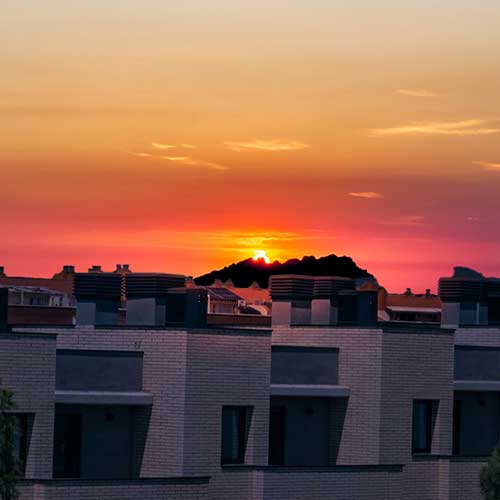
A drone provides context: the property's location relative to the sea, mountains, the city and transport, the scale of the whole complex, how it fits into the landscape. It's the format for a first impression, and for properties where location is part of the product's value.
A ground camera handles the details: interior, material quality, indoor light, the atmosphere of the space. It's the format that convinces the buyer on the level of "could I actually live or work here" — a question aerial footage can't answer.
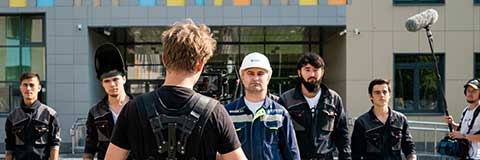
These formats work best together: an aerial flyover at the start of the video sets the scale and context, and ground shots of the interior and details close the emotional part of the sale. That's how most of our developer projects are built.
Ground filming is usually simpler to organize and, with a small crew, doesn't require special permits. Aerial filming adds a separate cost line for a drone pilot and flight permits — but delivers shots that can't be captured any other way.
For ground filming, in most cases with a small crew, no permit is required. Flying a drone within city limits requires a separate flight authorization (AESA/Enaire), and sometimes municipal approval as well — more on that in our article on filming permits. We handle the paperwork ourselves, so the client doesn't have to deal with it.
We shoot both formats for developers and real estate agencies in Barcelona, Catalonia and across Spain. Examples are in our architecture and real estate section; get a quote for your project by sending a request.